
IEX, promoted by Financial Technologies, will be a pan India neutral and transparent electronic demutualized exchange for efficient price discovery in the electricity market. PTC India Ltd has consented to take 26 per cent stake in IEX.

US Secretary of State Marco Rubio kick-started a three-day visit to India on Tuesday to advance bilateral ties in energy, trade and investment, defence, critical technologies, and exchange views on the West Asia crisis.
NTPC and NHPC, which together own a third of India's electricity generation, have roped in state-owned power sector financing firm, Power Finance Corporation for the joint venture along with TCS. "We (referring to NTPC and NHPC together) are the largest power generators and we hope to create a market for this," said NTPC Chairman and Managing Director R S Sharma.

Prime Minister Narendra Modi and Russian President Vladimir Putin held extensive discussions to strengthen bilateral trade, defence, and energy cooperation, while also addressing the ongoing Ukraine conflict and exploring avenues for peace and resolution, with Modi reiterating India's call for dialogue and diplomacy.
"Sooner or later, a greater part of our businesses will surely be taken up by the exchange, a more transparent platform," said a senior official from PTC India Ltd, the country's largest power trading company that accounts for about a quarter of the total volume of electricity traded in the country. Interestingly, PTC is one of the co-promoters of the exchange. Another major player in the power trading sector, NTPC Vidyut Vyapar Nigam Ltd, has confirmed similar apprehensions
Indian Energy Exchange will start training in operations and online trading for its members soon.

Indian benchmark equity indices, Sensex and Nifty, closed lower for the fourth consecutive session, driven by a surge in crude oil prices above USD 114 per barrel due to escalating tensions in West Asia, coupled with broad-based selling and FII outflows.

The Indian rupee depreciated by 43 paise to close at 94.81 against the US dollar, influenced by a negative trend in domestic equity markets, surging crude oil prices, and significant foreign institutional investor outflows.

HSBC has emerged as the leading international bank in facilitating fundraising for Indian companies through bonds, syndicated loans, and IPOs during January-September 2026, according to Hitendra Dave, CEO of HSBC India.

External Affairs Minister S Jaishankar will host US Secretary of State Marco Rubio in Mumbai on October 20 for talks aimed at strengthening the Comprehensive Global Strategic Partnership. Discussions will cover energy, trade, defence, and critical technologies. The visit also includes celebrations for the 250th anniversary of US Independence. This meeting follows earlier confusion regarding Rubio's visit and will also touch upon the India-US bilateral trade agreement, which both sides are close to concluding. The MEA clarified that hosting foreign dignitaries outside Delhi is a common practice.

US Secretary of State Marco Rubio is on a three-day visit to India to discuss bilateral ties in energy, trade, investment, defence, and critical technologies, as well as the West Asia crisis. His visit aims to strengthen the India-US Comprehensive Global Strategic Partnership amidst existing friction, with a focus on finalising a proposed bilateral trade deal.

Indian stock market investors are closely monitoring crude oil prices, geopolitical developments in West Asia, and the implications of the US Sanctioning Russia and Iran Act, which could impose tariffs on countries, including India, that purchase Russian crude.

The Indian men's badminton team secured a bronze medal at the Asian Games after a 1-3 defeat to China in the semifinals. Despite a strong performance from Satwiksairaj Rankireddy and Chirag Shetty, who won their doubles match, singles players Lakshya Sen and Ayush Shetty were unable to overcome their higher-ranked Chinese opponents. This marks India's first back-to-back Asian Games team medals in 40 years.

Indian benchmark indices Sensex and Nifty extended their rally for a second consecutive session, driven by a decline in Brent crude oil prices below USD 100 per barrel and strong buying in banking stocks and Reliance Industries.

India has officially announced its bid to host the 2036 Olympic and Paralympic Games, centered around the theme "Rising Together."

Indian benchmark indices Sensex and Nifty rebounded in early trade after two days of losses, driven by easing crude oil prices and strong buying in blue-chip IT stocks, despite continued global uncertainties. Track Sensex, Nifty on September 30.

Indian boxer Ankush Panghal secured the country's first medal at the ongoing Asian Games by defeating Tajikistan's Nekruz Salimov 5-0 in the men's 80kg quarter-final, guaranteeing at least a bronze.

Indian stock markets closed lower due to selling in IT and FMCG shares, triggered by renewed tensions in West Asia which led to a rally in crude oil prices and concerns over inflation and interest rates.

Indian stock markets, including the Sensex and Nifty, experienced their third consecutive day of declines, driven by a global selloff, escalating tensions in West Asia, and a subsequent rise in crude oil prices.

Finance Minister Nirmala Sitharaman stated that the Reserve Bank of India (RBI) will persist in its efforts to prevent excessive volatility in the rupee, which has significantly depreciated against the US dollar due to global uncertainties, despite India's strong macro-economic fundamentals.

A 25-basis-point increase would restore some real monetary restraint when expected inflation has risen, liquidity remains easy and growth is strong, points out Amarendu Nandy.

India's economy is projected to lose momentum in the second half of fiscal 2026-27, with tighter financial conditions, elevated energy prices, and broadening inflation pressures posing significant risks, according to DBS Bank economist Radhika Rao.

Akash Ambani is leading Jio Platforms' initial public offering (IPO), set to be India's largest, with a strategy that includes appealing to regional investors and drawing parallels to his grandfather Dhirubhai Ambani's historic public listing of Reliance Industries.

The Indian IPO market recorded its highest monthly fundraising in September, with 34 mainboard companies raising 39,309 crore, despite a significant decline in the Nifty 50 index.

Prime Minister Narendra Modi and US President Donald Trump held a telephone conversation to review progress in bilateral ties, covering trade, defence, and energy, against the backdrop of heightened trade friction due to the 'Lindsey O. Graham Sanctioning Russia and Iran Act of 2026'.

Indian benchmark indices Sensex and Nifty extended their losses for a third consecutive day, driven by firm crude oil prices, elevated global bond yields, and significant foreign fund outflows, making investors cautious.

Indian benchmark indices closed mixed, with the Sensex gaining 113.61 points to 78,079.96 and the Nifty falling 40.10 points to 24,395.85, as elevated crude prices and ongoing geopolitical uncertainty in the Middle East made investors cautious.
Indian benchmark indices closed mixed, with the Sensex gaining 113.61 points to 78,079.96 and the Nifty falling 40.10 points to 24,395.85, as elevated crude prices and ongoing geopolitical uncertainty in the Middle East made investors cautious.

If we really want to curb the further depreciation of the rupee and make the rupee appreciate, we want to come out of the mindset that the exchange rate is merely a number, bring policy corrections to help reduce the outflow of foreign exchange by imposing suitable tariffs to discourage imports and bring self reliance, discipline FPIs, and correcting rules governing royalty outflows, suggests Dr Ashwani Mahajan, National Co-Convenor, Swadeshi Jagaran Manch.

Indian benchmark equity indices, Sensex and Nifty, closed lower for multiple consecutive days, with the Nifty extending its losses to a seventh day, primarily due to elevated crude oil prices following the expiry of the US-Iran ceasefire without a diplomatic resolution.
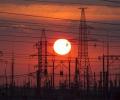
India's power sector is undergoing a significant transformation, driven by a planned shift towards renewable energy and ambitious capacity expansion targets, with major players like NTPC, JSW Energy, Adani, and Tata Power prioritising predictable returns. However, execution challenges and valuation concerns remain critical factors for sustained growth.
Indian benchmark indices Sensex and Nifty saw a rebound in early trade, driven by a moderation in crude oil prices, despite persistent selling by Foreign Institutional Investors (FIIs) and mixed global market cues.

India's national security adviser was in Dhaka for roughly three-quarters of the day on Thursday to prepare the ground for Bangladesh Prime Minister Tarique Rahman's visit to New Delhi.

Indian benchmark indices, Sensex and Nifty, traded flat in early deals due to elevated crude oil prices exceeding USD 100 per barrel and persistent geopolitical tensions, which subdued investor risk appetite.

A Russian missile strike on the ArcelorMittal steel plant in Kryvyi Rih, Ukraine, has resulted in two fatalities and 13 injuries. The attack partially disrupted operations at the country's largest steelworks, owned by Indian billionaire Lakshmi Mittal, damaging key energy and blast furnace facilities. Search and rescue efforts are underway, and the extent of the damage is being assessed.

Fitch Ratings has increased India's GDP growth forecast for the current fiscal year (FY'27) to 6.9 per cent, up from 6.4 per cent, attributing the revision to robust economic growth in the June quarter and overall economic resilience. The agency also anticipates the Reserve Bank of India (RBI) will raise interest rates by 0.25 per cent in October.

India's procurement of Venezuelan crude oil has picked up momentum since April and the South American nation has already emerged as the third largest oil supplier to the country.

Indian benchmark indices, Sensex and Nifty, closed flat on Friday, with elevated crude oil prices due to geopolitical uncertainties and a rebound in US Treasury yields making investors cautious and preventing a decisive market rally.

State-run Oil and Natural Gas Corporation (ONGC) has approved the development of a 1.75 million tonnes (mt) strategic petroleum reserve (SPR) in Mangaluru, a project deemed of national importance, with plans for broad commercial utilisation.

India is hosting the BRICS summit, leveraging the platform to address global trade tensions and champion the developmental priorities of the Global South, including food, energy, and supply chain security. The summit, attended by leaders like President Xi Jinping and Vladimir Putin, will focus on resilience, innovation, cooperation, and sustainability, with India aiming to strengthen intra-BRICS collaboration and discuss global matters. The expanded BRICS grouping represents a significant portion of the world's population and GDP, making its discussions crucial for global economic stability.
